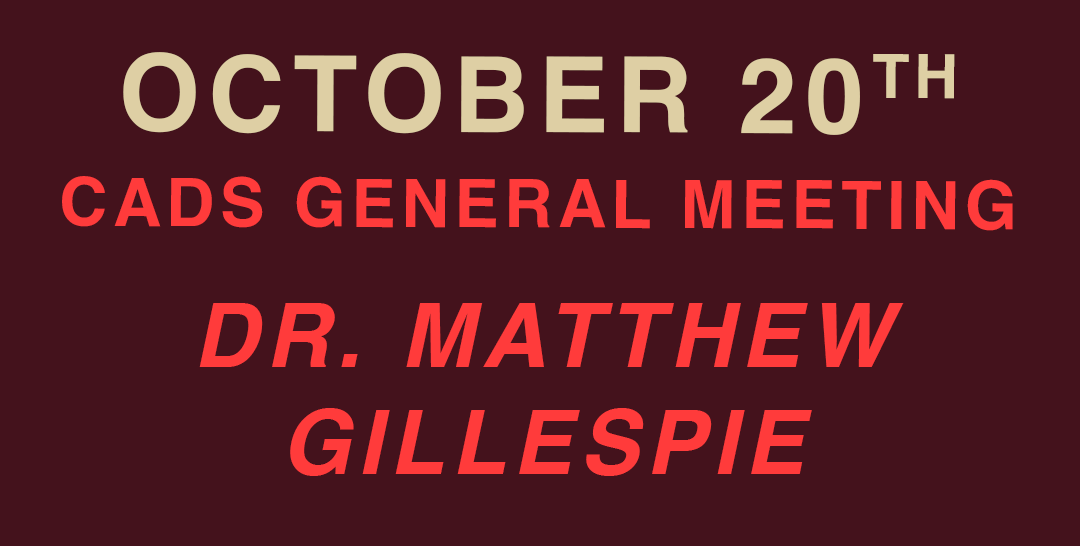
October 20, 2026 General Meeting

Address: 8600 Balcones Club Drive, Austin, Texas, United States

Contact: Sara Carter

Email: sara.carter@capitalareadental.org

Website: https://myaccount.ada.org/s/events?comSiteId=a2E8V00000Ndf77UAB#

Phone: 512-335-1405

Balcones Country Club

Tuesday, October 20, 2026

5:30 - 8:30pm

Free Happy Hour for Meeting Registrants!

Dental Archaeology: How Uncovering the Past Can Help You Predict the Future

Speaker: Dr. Matthew Gillespie 

REGISTER --> HERE

Course Overview


Dental archeology is the study of tooth's restoration history using a restorative dissection process which provides a dentist the opportunity to directly assess the foundational areas of a tooth. This process is similar to how archeologists use step wise excavation of ancient sites and the subsequent analysis of artifacts to provide insight which can't be obtained using other techniques. This process provides for a more accurate diagnosis which can lead to improved outcomes for both the patient and the dentist. Various patterns of failure seen in everyday clinical situations will be discussed as well as a system to implement this process in a private practice office.

Course Objectives:

1. How to implement a clinical dynamic diagnostic process  
2. Identifying failure patterns  
3. Restorative options after a surgical investigative process 
4. Understand the differences in a fee for service and value based compensation systems 


2 Hours of CE


REGISTER --> HERE

October 20, 2026 General Meeting

Address: 8600 Balcones Club Drive, Austin, Texas, United States

Contact: Sara Carter

Email: sara.carter@capitalareadental.org

Website: https://myaccount.ada.org/s/events?comSiteId=a2E8V00000Ndf77UAB#

Phone: 512-335-1405

Balcones Country Club

Tuesday, October 20, 2026

5:30 - 8:30pm

Free Happy Hour for Meeting Registrants!

Dental Archaeology: How Uncovering the Past Can Help You Predict the Future

Speaker: Dr. Matthew Gillespie 

REGISTER --> HERE

Course Overview


Dental archeology is the study of tooth's restoration history using a restorative dissection process which provides a dentist the opportunity to directly assess the foundational areas of a tooth. This process is similar to how archeologists use step wise excavation of ancient sites and the subsequent analysis of artifacts to provide insight which can't be obtained using other techniques. This process provides for a more accurate diagnosis which can lead to improved outcomes for both the patient and the dentist. Various patterns of failure seen in everyday clinical situations will be discussed as well as a system to implement this process in a private practice office.

Course Objectives:

1. How to implement a clinical dynamic diagnostic process  
2. Identifying failure patterns  
3. Restorative options after a surgical investigative process 
4. Understand the differences in a fee for service and value based compensation systems 


2 Hours of CE


REGISTER --> HERE